Summary of The New Jim Crow by Michelle Alexander
Michelle Alexander’s The New Jim Crow: Mass Incarceration in the Age of Colorblindness (2010) argues that the U.S. criminal justice system functions as a racial caste system, disproportionately targeting Black and Brown communities through the War on Drugs and mass incarceration. Alexander contends that this system operates similarly to the Jim Crow laws that enforced racial segregation in the late 19th and early 20th centuries.
Key Arguments From The New Jim Crow:
- From Slavery to Mass Incarceration: Alexander traces the evolution of racial control in the U.S., from slavery to Jim Crow to today’s prison-industrial complex.
- The War on Drugs as Racial Control: She argues that the War on Drugs, launched in the 1980s, was a deliberate political strategy to criminalize Black communities, despite similar drug use rates among racial groups.
- Discrimination in Policing & Sentencing: Racial profiling, stop-and-frisk policies, and harsher sentencing for crack cocaine (used more by Black Americans) versus powder cocaine (used more by whites) reinforce systemic bias.
- The Felon Label as a New Caste System: Formerly incarcerated people face legal discrimination in housing, employment, voting rights, and public benefits, trapping them in a second-class status.
- Colorblindness as a Facade: The claim that the U.S. is “colorblind” obscures how race-neutral policies (e.g., “tough on crime” rhetoric) produce racially biased outcomes.
Critical Analysis
Strengths:
- Persuasive Evidence: Alexander compiles extensive data on racial disparities in arrests, sentencing, and post-prison discrimination.
- Historical Context: Her comparison between Jim Crow and mass incarceration highlights recurring patterns of racial subjugation.
- Impact on Policy Debates: The book has influenced criminal justice reform movements, including calls to end mandatory minimums and restore voting rights.
Criticisms & Limitations:
- Gender & Class Oversights: Critics argue Alexander focuses primarily on Black men, neglecting how mass incarceration affects Black women, Latinos, and poor whites.
- Structural vs. Intentional Racism: Some scholars contend that while systemic racism exists, Alexander overstates intentionality behind policies like the War on Drugs.
- Solutions & Alternatives: The book’s policy prescriptions (e.g., ending the drug war) are seen as necessary but insufficient for dismantling broader economic and racial inequities.
- Dated Data: Published in 2010, the book doesn’t account for recent reforms (e.g., some states legalizing marijuana) or rising incarceration rates among other groups.
Conclusion
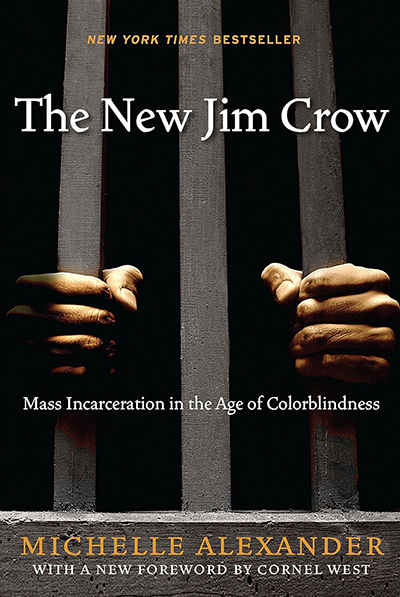
The New Jim Crow remains a groundbreaking critique of mass incarceration’s racial dimensions, sparking crucial debates. While some arguments could be refined or updated, its core thesis is that the criminal justice system perpetuates racial hierarchy, and has profoundly shaped activism and scholarship.
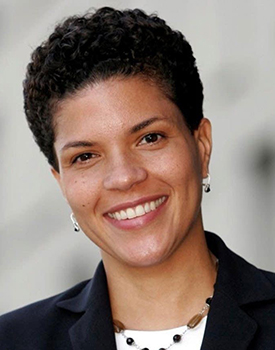
Michelle Alexander: Life and Career
Early Life & Education: Michelle Alexander was born on October 7, 1967, in Chicago, Illinois. She grew up in a middle-class family and attended Vanderbilt University, where she earned a bachelor’s degree in law in 1989. She later graduated from Stanford Law School in 1992, where she was a member of the prestigious Stanford Law Review.
Legal Career & Advocacy: After law school, Alexander clerked for Justice Harry A. Blackmun at the U.S. Supreme Court. She then worked as a civil rights attorney, focusing on racial justice and police misconduct cases. Some key roles included:
- Director of the Racial Justice Project (ACLU of Northern California, 1998–2005): Led litigation against racial profiling and police brutality.
- Professor at Stanford Law School and Ohio State University: Taught courses on civil rights, race, and criminal justice.
Landmark Work: The New Jim Crow Published in 2010, The New Jim Crow: Mass Incarceration in the Age of Colorblindness became a national bestseller and a cornerstone of criminal justice reform discussions. The book argues that mass incarceration functions as a modern racial caste system, drawing parallels to Jim Crow laws.
Later Career & Impact:
- Visiting Professor at Union Theological Seminary (2015 – 2020): Explored the intersection of racial justice and spirituality.
- Op-Eds & Public Speaking: A frequent commentator in The New York Times, The Nation, and NPR.
- Current Work: Continues advocacy through writing and lectures, focusing on racial and social justice movements.
References:
- Alexander, M. (2010). The New Jim Crow: Mass Incarceration in the Age of Colorblindness. The New Press.
- The New Press. (n.d.). Michelle Alexander Biography. Retrieved from https://thenewpress.com/authors/michelle-alexander
- Union Theological Seminary. (2020). Michelle Alexander Joins Union as Visiting Professor. Retrieved from https://utsnyc.edu/michelle-alexander-joins-union/